What is Ads in Digital Marketing?
Ads in digital marketing refer to paid promotional content delivered through online platforms to reach a targeted audience. These advertisements can appear on search engines, social media platforms, websites, mobile apps, and even connected devices.
Unlike traditional advertising, digital ads allow precise targeting, real-time tracking, and performance optimization.
👉 For a deeper explanation, you can visit this detailed resource:
https://tdigital.in/what-is-ads-awhat-is-ads-digital-marketing-2026/
Why Ads are Important in Digital Marketing (2026 Perspective)
In 2026, organic reach alone is no longer sufficient. Businesses rely heavily on paid ads to:
- Reach a larger audience quickly
- Generate instant traffic
- Improve brand visibility
- Drive conversions and sales
- Retarget potential customers
Digital ads are no longer optional—they are a core component of any successful marketing strategy.
Types of Ads in Digital Marketing
1. Search Engine Ads (PPC)
Search engine ads appear on platforms like Google when users search for specific keywords.
Example: When someone searches “best digital marketing course,” paid ads appear at the top.
Key Benefits:
- High intent audience
- Immediate visibility
- Pay only when someone clicks
2. Social Media Ads
Social platforms like Facebook, Instagram, LinkedIn, and TikTok offer highly targeted ad options.
Popular Formats:
- Image ads
- Video ads
- Carousel ads
- Story ads
3. Display Ads
Display ads are visual banner ads shown on websites, blogs, and apps.
Best For:
- Brand awareness
- Retargeting campaigns
4. Video Ads
Video marketing continues to dominate in 2026.
Platforms:
- YouTube
- Instagram Reels
- OTT platforms
5. Native Ads
Native ads blend with the content of the platform, making them less intrusive.
Example: Sponsored articles on blogs.
6. Influencer Ads
Brands collaborate with influencers to promote products authentically.
How Digital Ads Work
Digital ads operate through a bidding system and algorithms. Here’s a simplified breakdown:
- Advertiser selects target audience
- Chooses platform and ad format
- Sets budget and bidding strategy
- Platform displays ads based on relevance and bid
- Performance is tracked in real time
Key Components of Successful Ads
1. Target Audience
Understanding your audience is crucial. In 2026, AI helps analyze behavior, interests, and purchase patterns.
2. Ad Copy
Your message should be:
- Clear
- Engaging
- Action-oriented
3. Creative Design
High-quality visuals significantly impact performance.
4. Landing Page
A well-optimized landing page improves conversion rates.
5. Call to Action (CTA)
Examples:
- Buy Now
- Learn More
- Get Started
Benefits of Ads in Digital Marketing
1. Precise Targeting
You can target users based on:
- Age
- Location
- Interests
- Behavior
2. Measurable Results
Unlike traditional marketing, digital ads provide data like:
- Click-through rate (CTR)
- Conversion rate
- Cost per click (CPC)
3. Cost Efficiency
You can start with a small budget and scale gradually.
4. Retargeting Opportunities
Re-engage users who visited your website but didn’t convert.
Latest Trends in Digital Ads (2026)
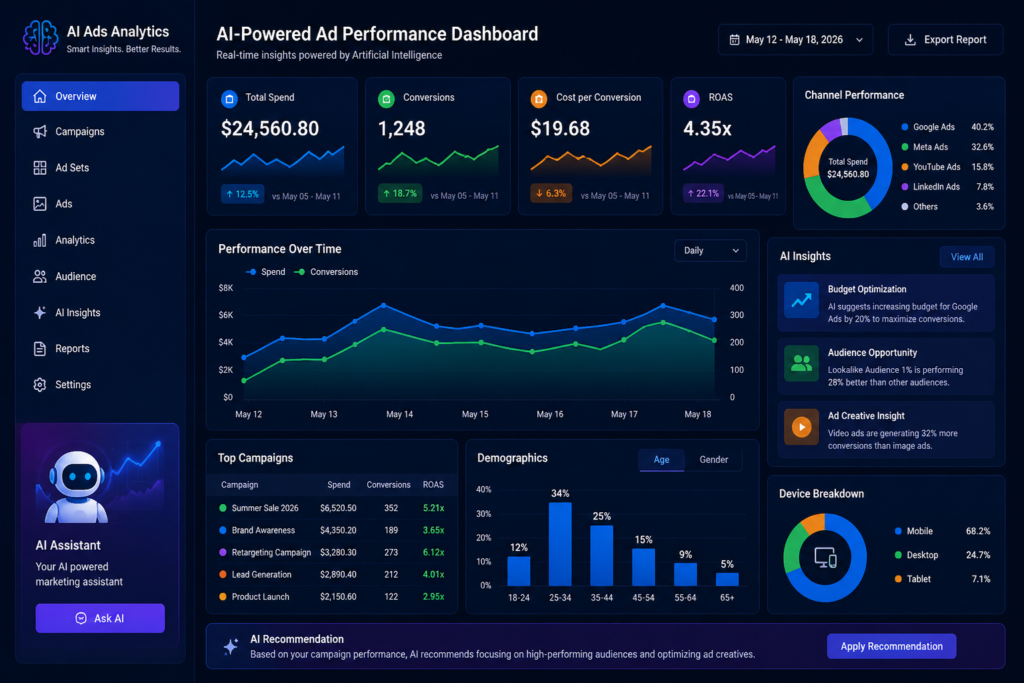
1. AI-Powered Advertising
Artificial Intelligence optimizes:
- Ad placement
- Audience targeting
- Budget allocation
2. Voice Search Ads
With smart assistants growing, voice-based ads are emerging.
3. Privacy-First Advertising
With stricter data regulations, marketers now focus on:
- First-party data
- Contextual targeting
4. Interactive Ads
Polls, quizzes, and AR-based ads are gaining popularity.
Best Practices for Running Ads in 2026
1. Focus on Personalization
Generic ads no longer work. Tailor content based on user preferences.
2. Optimize for Mobile
Most users browse on mobile devices.
3. Use A/B Testing
Test different versions of ads to find what works best.
4. Monitor Performance Regularly
Track KPIs and adjust campaigns accordingly.
5. Invest in Video Content
Short-form videos perform exceptionally well.
Common Mistakes to Avoid
- Ignoring audience research
- Poor ad creatives
- Weak landing pages
- Not tracking performance
- Overspending without strategy
Internal Linking Suggestions
To improve SEO and user engagement, you can internally link this article to:
- “Digital Marketing Strategy Guide”
- “SEO vs Paid Ads Comparison”
- “Social Media Marketing Tips”
- “How to Generate Leads Online”
Outbound Link Reference
For more insights into digital marketing and advertising strategies, visit:
https://tdigital.in/
Future of Ads in Digital Marketing
The future of digital ads is centered around:
- Automation
- AI-driven decision-making
- Hyper-personalization
- Immersive experiences (AR/VR)
Marketers who adapt to these changes will gain a significant competitive advantage.
Conclusion
Ads in Digital Marketing in 2026 are smarter, more targeted, and more impactful than ever before. From search ads to AI-driven campaigns, businesses now have powerful tools to reach their ideal audience.
To succeed, focus on:
- Understanding your audience
- Creating engaging content
- Leveraging data and analytics
By mastering digital ads, you can drive growth, increase visibility, and achieve your business goals in today’s competitive online landscape.